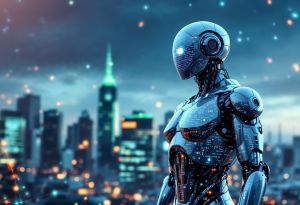
In an era of rapid technological advancement, the notion that Artificial Intelligence (AI) could completely replace human workers and functions is a common concern. However, a deeper examination reveals that despite AI’s impressive computational power, there are fundamental, uniquely human capabilities that remain irreplaceable. Instead of outright replacement, the future points towards a powerful partnership where AI augments human potential rather than diminishes it.
The Unparalleled Nuance of Human Understanding
The human brain stands as one of the most sophisticated and efficient information-processing systems known. While AI excels at processing vast datasets and identifying patterns, it inherently lacks the nuanced understanding that is natural to humans. Humans possess the ability to “read between the lines,” comprehend context, and make intuitive leaps even when faced with limited information – a feat that AI systems, despite their impressive power, cannot replicate. This deeper understanding allows for complex problem-solving that goes beyond mere data analysis.
The Indispensable Role of Emotional Intelligence
One of AI’s significant limitations is its inability to genuinely understand or experience emotions. While AI can analyse sentiment and recognise facial expressions, it cannot replicate the true depth of human emotional intelligence. This capability is crucial for many critical decisions in both business and life. Whether it involves negotiating intricate deals, guiding a team through difficult periods, or creating products that deeply resonate with consumers, human emotional intelligence remains an irreplaceable asset.
True Creativity and the Genesis of Novel Ideas
The ability to imagine and bring into reality things that have never existed is arguably the most remarkable human characteristic. While AI can generate variations based on existing patterns, it cannot conceive truly novel ideas or grasp their deeper significance. Innovation demands not only creativity but also a profound understanding of human needs, desires, and the subtle complexities of society – qualities that are uniquely human. AI can assist in the creative process, but the initial spark of originality and the understanding of its impact belong to humans.
Ethical Judgment and Value-Based Decision Making
Complex ethical decision-making, particularly in fields such as healthcare, law, or business, highlights another critical area where humans remain supreme. While AI can offer data-driven insights, it cannot weigh moral implications or make value-based judgments. These types of decisions necessitate an understanding of human values, societal norms, and the capacity to balance competing interests – all of which remain firmly within the human domain. AI lacks the moral compass and conscience that guides human judgment.
The Human-AI Partnership:
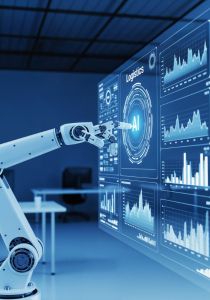
Augmentation, Not Replacement The true transformation occurring is not about replacement, but about elevation. AI is emerging as a powerful tool for augmentation, acting like a brilliant assistant that can manage routine tasks, process information swiftly, and provide valuable insights. However, this assistant ultimately requires human wisdom to guide its application. This partnership frees humans to concentrate on their strengths: strategic thinking, relationship building, and creative problem-solving.
As AI undertakes repetitive and routine tasks, humans are enabled to focus on higher-value activities that demand uniquely human capabilities. This shift is creating new roles and opportunities that were unimaginable a decade ago, demonstrating that technological advancement evolves human work rather than eliminating it. The future workplace will be shaped by those who master the art of combining both human and artificial intelligence, embracing AI as a tool for enhancement. The most powerful force is not artificial intelligence or human intelligence alone, but intelligence augmented by technology and guided by human wisdom.
Ultimately, our humanity – our ability to connect, create, and care – becomes more valuable, not less, as technology advances.